Alongside the research carried out in the Passarella’s group, our research focuses on heterocyclic systems, from the development of synthetic methodologies to the synthesis of natural products and other bioactive heterocycles.
1. Heterocycle functionalisations
We are developing new strategies for the selective functionalisation of heterocycles, with a focus on their sustainable and efficient late-stage modification in active pharmaceutical ingredients. Alongside experimental synthesis, our work is supported by computational studies that provide mechanistic insights.
Our recent contributions:
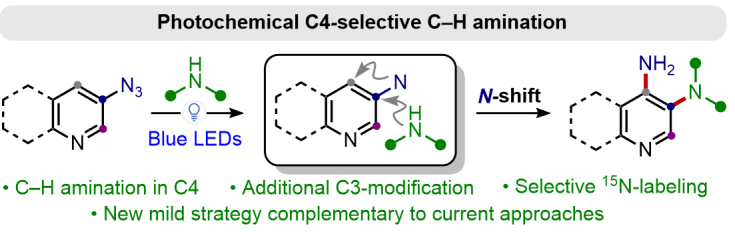
1. Photochemical C–H amination of quinolines
Org. Lett. 2026, 28, 5746
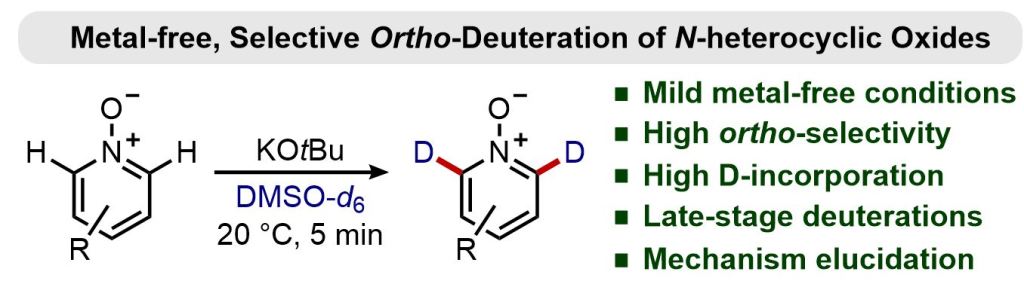
2. Selective Deuteration of N-heterocycles
Adv. Synth. Catal. 2025, 367, e202401585
2. Boron-containing heterocycles
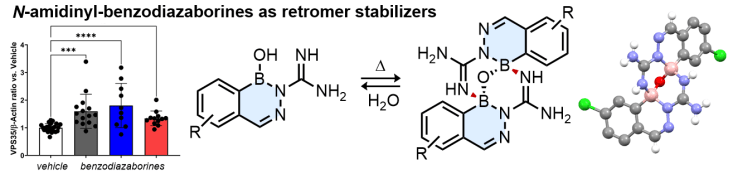
Boron-containing compounds have gained increasing attention in medicinal chemistry owing to their unique chemical versatility and biological activity. Our group focuses on the development of novel boron-based heterocycles, with potential applications as antimicrobials (such as benzoxaboroles) and as retromer stabilizers (such as benzodiazaborines).
Our recent contributions:
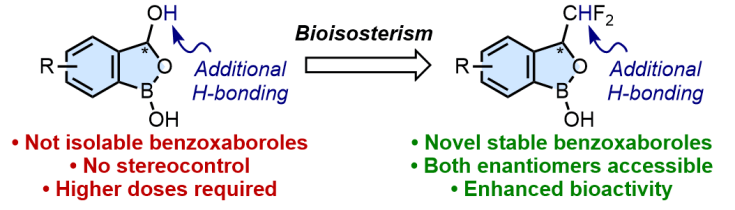
1. 3-difluoromethyl-benzoxaboroles
Org. Lett. 2026, 28, 1527
2. N-Amidinyl-Benzodiazaborines
Adv. Syn. Catal. 2026, 368, e70551
3. Natural Products
Alternative routes to the synthesis of natural products can grant access to novel chemical entities with higher molecular complexity, diversity, and efficiency. Our group is interested in the synthesis of a broad range of complex natural products, including cannabinoids and N-heterocyclic biomolecules.
Our recent contributions:
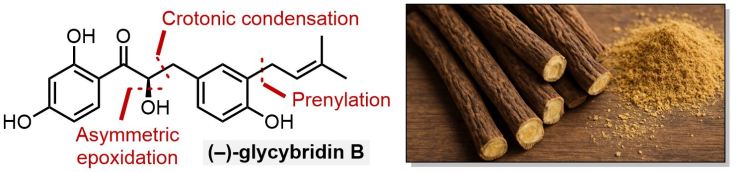
1. Total synthesis of (−)-Glycybridin B
Chem. Eur. J. 2025, 31, e02228
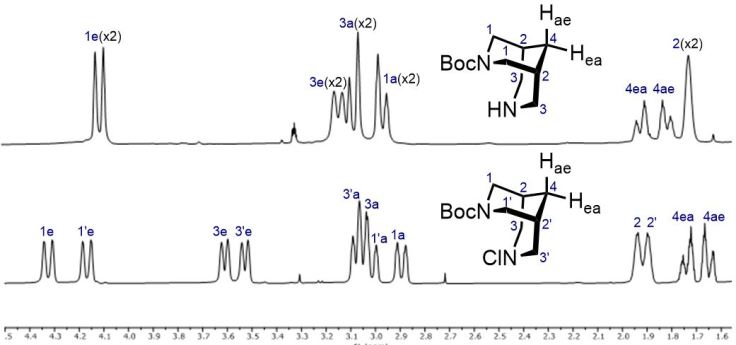
2. Rotational Motion in Bispidines
Org. Lett. 2025, 27, 9669